By STILONN Valves & Controls Pvt. Ltd. — India’s first SFN valve manufacturer for data center liquid cooling
A quiet revolution is underway inside the world’s data centres. Servers that once sat in cold aisles of rushing air are now being cooled by liquid — through cold plates bolted directly onto chips, and in the most advanced laboratories, fully submerged in dielectric fluid. What seemed experimental only two years ago is fast becoming the default design assumption for the next generation of AI facilities.
Why Air Is Running Out of Headroom
AI and GPU workloads have pushed rack power densities to levels traditional IT rooms were never designed for. A conventional enterprise rack drew 5–10 kW; modern AI training racks demand 80, 120, even 200 kW and beyond. At these heat loads, air cooling becomes progressively harder — more energy, more fans, more floor space, more cost per kilowatt of compute.
Liquid is simply better at carrying heat. Direct-to-chip cooling and immersion systems bring the coolant to the source of heat, transferring it thousands of times more effectively than air ever could. The result: higher compute density, lower cooling energy, and a smaller facility footprint for the same IT capacity.
This Is Not Just a Cooling Change — It Is an Infrastructure Change
Moving from air to liquid reshapes the entire facility. It changes power distribution, structural loading, fire strategy, controls, commissioning and day-two operations. The design question for a modern data centre is no longer simply whether the servers can be kept cool — it is whether the entire facility can be designed, built, commissioned and operated safely and reliably around high-density liquid-cooled computing.
And at the heart of that question sits something deceptively simple: the fluid network itself. Every liquid-cooled facility depends on a Secondary Fluid Network (SFN) — stainless steel piping, coolant distribution units (CDUs), isolation and balancing valves, air vents, strainers and skids — circulating coolant between the heat rejection plant and the racks. If this network leaks, clogs or fails, the world’s most expensive computing hardware is at risk.
The Real Challenge Is Fluid Management — and India Has Seen It Before
Leak-free orbital-welded joints. Clean internal surfaces that shed no particles into cold plates. Material compatibility with glycol coolants. Full traceability of every weld and every heat number. Precision flow balancing across hundreds of racks. These requirements sound new to the data centre industry — but they are the daily discipline of another Indian industry that has practised them for decades: pharmaceuticals.
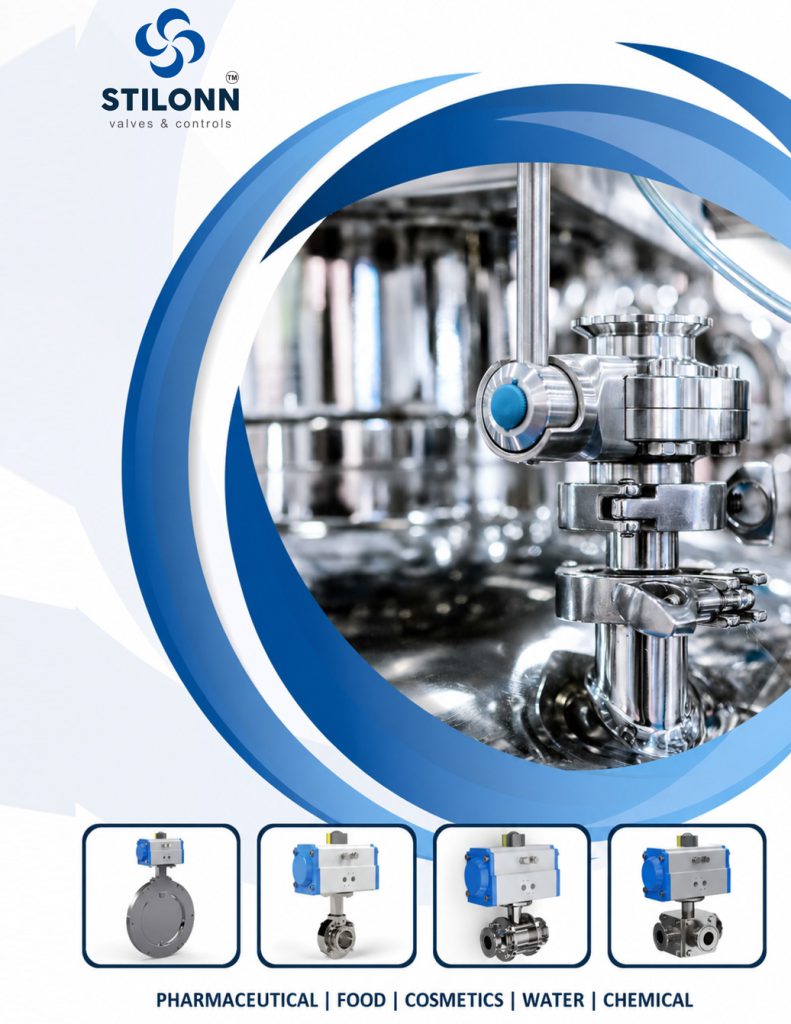
Hygienic stainless steel piping for pharma — orbital TIG welding, controlled Ra surface finishes, pickling and passivation, documented cleanliness — is engineering DNA that maps almost perfectly onto liquid cooling. India does not need to import this capability. It already exists here.
India’s Moment
India is in the middle of a historic data centre build-out, and AI-ready capacity is multiplying. Global CDU makers and hyperscale operators are actively looking for reliable domestic partners for SFN piping, valves and skids — partners who can deliver pharma-grade quality at data centre speed, with Make-in-India supply chains that shorten lead times from months to weeks.
The window is now. The standards are being written, the approved-make lists are being formed, and the facilities breaking ground today will define the supply chain for the decade ahead.
Where STILONN Stands
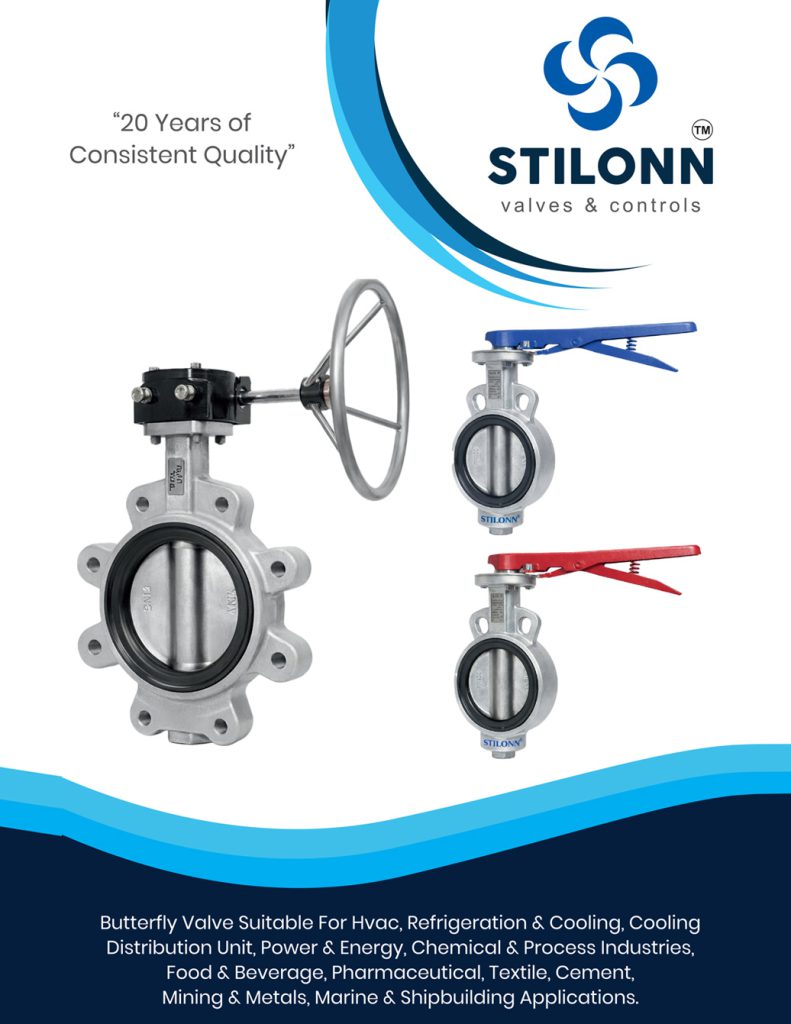
STILONN Valves & Controls saw this shift early. Building on 18 years of stainless steel valve manufacturing for pharmaceutical, food and biotech industries, STILONN became India’s first manufacturer of SFN valves purpose-built for data center liquid cooling — butterfly isolation valves, full-bore ball valves, static balancing valves, air vent valves, check valves and strainers, all engineered for coolant service.
Today STILONN supplies leading CDU OEMs and data centre operators across India, with completed and ongoing liquid cooling projects, in-house testing from PMI to pressure benches, and an expanding scope that now reaches into SS piping fabrication and complete skid manufacturing — backed by decades of hygienic fabrication expertise.
The future of data centre cooling is liquid. The future of its supply chain can be Indian. STILONN intends to make sure of both.
STILONN Valves & Controls Pvt. Ltd. — Gami Industrial Park, Pawane, Navi Mumbai • www.stilonnvalves.com • stilonnvalves@gmail.com • +91 90292 39287